70/30: Apple’s Magic Moneymaking Machine

My prediction: users will love this, developers will happily trade 30% for better distribution. It is the end of Direct to Fan for app developers.

Amplify’d from techcrunch.com

Back in the old days, if you wanted to sell an Apple app you had to make a really good app, make a really good website, and have John Gruber or Merlin Mann link to it. You waited, hoped people bought the app, and iterated the apps over and over, giving updates out for free. It was a hit-or-miss affair. This is how software sales had always worked, even under Windows and even under most phone OSes – until the iPhone App Store.

Suddenly you had a quasi-curated, easy-to-use, one-click system for downloading apps. It worked really well. This was great for phones. So why not add it to OS X?

Read more at techcrunch.com


реклама на авто спб

Japanese Robots Hope To Destroy The Music Industry As We Know It

This does not bode well for the gossip-channels… What could you gossip about in the case of robots?

Amplify’d from www.hypebot.com

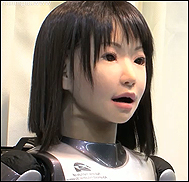
image from www.celebrityaccess.com Japanese engineers have now developed a fembot that can sing J-pop, calling into stark question the future of human pop singers. According to technology blog Popsci, the robot, an HRP-4, was developed using breath-analysis software and mouth movement observation based on human models. The divabot blinks and opens her mouth appropriately as she sings, mimicking the patterns of a human singer.

The singing is not a track recording, but instead actual singing using a technique called ‘robotic shaped note singing,’ managed by Vocaloid software developed my Yamaha.

“We hope the entertainment industry will be able to make widespread use of robots,” said Masataka Goto, who leads the Institute of Advanced Industrial Science and Technology’s media interaction group. (via Ian Courtney at CelebrityAccess

Read more at www.hypebot.com


как самому продвинуть сайтvk реклама

imeem Founder Dalton Caldwell’s Must-See Talk On The Challenges Facing Music Startups

This was discussed at yesterdays Music and Bits as well. I would argue that music startups still make sense, if they turn to music that has not yet been signed to traditional industry parties. Saves tons of money, opens up a lot of possiblities for (future) sustainability.

Amplify’d from techcrunch.com

Overall, Caldwell’s talk isn’t going to be encouraging for anyone hoping to launch a music startup: at one point early on he says, “Every time a founder does a music startup, a likely-more-successful startup dies”. But Caldwell’s message doesn’t seem to be that launching a music startup is completely impossible. Rather, it’s just incredibly hard, because you have so many things working against you. And he wouldn’t recommend it.

The bottom line for fledgling startups: these record execs need to discover businesses that will generate hundreds of millions of dollars, and they can’t take gambles with a bunch of startups that want to gradually build up a user base and focus on monetization when they (probably never) hit critical mass. They’ve tried that, and it hasn’t worked out for them.

Read more at techcrunch.com


game on mobileаренда номеров